I'm The It Girl

where it's at

All You Need To Know About Fragrances And Perfumes

20 December 2022 by amber Leave a Comment

perfume
Photo by Fernando Andrade on Unsplash

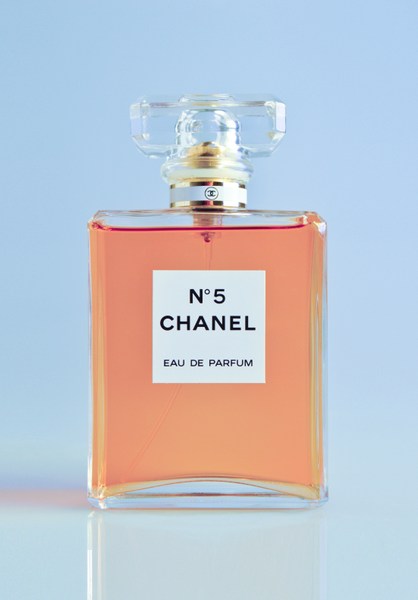
Perfumes were originally used as a way to mask the smell of bad odours, which were much more common in times gone by. People didn’t wash as often and good hygiene was more difficult to achieve.  However, perfumes and fragrances have long been used as a way to attract the opposite sex. Perfumes are typically used to make a person smell good. It has also been found that the right perfume can also make others attracted to you.It’s all very well looking nice and choosing the right cosmetics for your skin type, but if you don’t smell nice too, you’re like a flower without any scent, rather disappointing.

Unique Signature Scents

When you buy perfumes, however, you have to be careful. It is very unwise to just pick up a bottle and head off to the counter to buy that fragrance. You have to test it on your skin first. Not only is it possible that you could be allergic to some perfumes, but a fragrance that smells nice on one person will not smell the same on you.

There is something that biochemists and manufacturers of perfumes alike call the signature scent. This signature scent refers to the particular chemical makeup of the body, which dictates how our skin will take to any fragrance that we apply onto it. We all have unique signature scents because it is determined by our particular lifestyle habits and choices, diet, the medication that we take if we are taking any, our skin type and coloring, and many other factors. Thus, because of signature scent, a specific fragrance will smell differently on different people.

The Three Elements of Fragrance

The scent of a perfume is determined by three elements: the theme of the fragrance, its notes and its concentration. Knowing about these three elements can help you decide on which would be the best perfume that would suit you and your personality.

Theme is what creates variation among fragrances. It is also called accord and is dependent on the base upon which the perfume is formulated, and there are four common bases used in formulating perfumes. These four are:

* Citrus – created from fruits rich in citric acid, like oranges, bergamots and lemons, always light and fresh-smelling.
* Earth – lends an air of mystery upon the wearer, formulated from minerals or from non-flowering plants such as cinnamon, vanilla, honey and sandalwood.
* Musk – always considered sexy and alluring, and though previously made from the sacs of animals such as the civet and the Asian musk deer, they are now created synthetically.
* Floral – the most common theme among perfumes; as the name suggests, they are made from the essence of flowers and are often strong, clinging and sweet.

The notes of a perfume, on the other hand, are what are known as the impressions of the fragrance. It is the lingering air left by the perfume as it evaporates from the skin. All scents have three notes, called the top, the heart and the base.

* Top note – the instant impression created by the fragrance. It is supposed to attract people to the scent, but it quickly dissipates.
* Heart note – called the body of the perfume, the perfume’s essence. It tells the smeller what the fragrance is supposed to be about.
* Base note – the scent that lingers after the top note and the heart note evaporates. It is the main message of the perfume.

The last element to be considered is the concentration of the perfume. Concentration indicates how pure the perfume is, or the amount of perfume oil added into the fragrance. The purest perfume is known to be extremely volatile and can cause irritations when applied right onto the skin. To prevent this and to allow users to enjoy fully the fragrance, perfume oils are mixed into ethanol, with water sometimes added in.

Perfume extracts are the most concentrated among fragrances. They are meant to be used sparingly and only on the body’s pulse points. Coming after perfume extracts in terms of concentration is the eau de parfum, and after that, the eau de toilette. These two are often sprayed all over the body. The least concentrated of fragrances is the eau de cologne.

Tips on How to Buy Perfume

Here are a few tips to keep in mind when buying a scent for yourself.

1. Never buy a scent just because you liked how it smelled on someone else. Remember that our signature scent is uniquely our own, so what may smell good on others may not be as good on our skin.

2. Never be in a rush when buying perfume. The best way to test a fragrance is to spray some on your wrist and let it linger for 30 minutes. It usually takes a scent to display all its three notes within 30 minutes. If you like what you smell on yourself after that time, go ahead and buy the fragrance.

3. Always get a scent that expresses your personality. You should always think of the fragrances you wear as extensions of yourself.

4. Always remember that the chemical makeup of a perfume is delicate. Therefore, never store your fragrances in extremely cold or extremely hot places, or where they can be caught by direct sunlight.

5. Never hoard your perfumes or else they will just evaporate.
Filed Under: Beauty

8 Tips For Choosing The Right Cosmetics For Your Skin Type

20 December 2022 by amber Leave a Comment

choosing the right cosmetics for your skin type
Photo by Element5 Digital on Unsplash

The right cosmetics for your skin type is important to maintain a healthy and youthful skin.

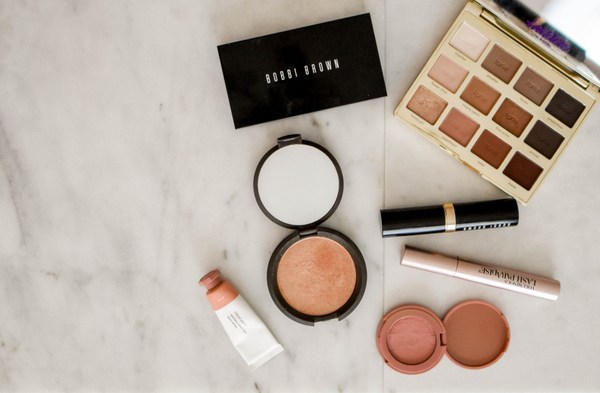
There are many different types of cosmetics available in the market today. The most common ones are foundation, concealer, powder, blush and eye shadow. Foundation is used to even out the complexion of your skin by covering up imperfections such as acne scars, dark spots or redness. Concealer is used to cover up small blemishes or dark circles under the eyes. Powder is used on top of foundation to set it in place and give a matte finish. Blush is used on top of bronzer and/or powder to give a healthy glow to the face, while eye shadow can be applied on top of eyeliner for a glamorous look.

The right cosmetics for any skin type is important to create a fresh natural appearance as well as to prevent reactions to the cosmetics such as allergies with resulting rashes, itching and weeping or breakouts with whiteheads or blackheads and painful skin eruptions. Every person’s skin is unique and different areas on a person’s face may have different characteristics which must be taken into consideration when choosing appropriate cosmetics.

If you’ve been disappointed when your powder eye shadow creases and slides before lunch or your foundation looks lined and caked, understanding the characteristics of your skin and purchasing appropriate cosmetics for your skin type is a worthwhile exercise. Here are some tips to help you look your best.

Avoid cosmetics that dry or irritate your skin

Each different skin type will react differently to the various types of cosmetics. Even if a particular brand works for your eye shadow, the same brand may not work for lipstick. This is because the skin type on your eyelids may be very different from the skin type on your lips. When you are choosing cosmetics such as foundation, for example, avoid drying cosmetics or cosmetics that cause your skin to break out. Unfortunately, you may have to try several products in order to determine those that work on your skin consistently. Another issue which must be considered is that your skin may build up a reaction to a particular cosmetic which did not previously cause a skin irritation, so you may be forced to find an alternative to a tried and true brand which worked well in the past. Skin characteristics may change significantly over a lifetime as well, forcing a change in the type of cosmetics which you select.

Consider your skin tone when selecting cosmetics

Even if the particular type of cosmetic is just right for your skin type, choosing the wrong color–one which is either too light or too dark will make the cosmetics less than attractive. Select cosmetics that complement and match your skin tone and minor imperfections in skin tone and texture will disappear. Darker foundations, deeper colors for eye shadow and eyeliner will be best suited for those with chocolate or olive skin tones. On the other end of the spectrum, if you have pale skin, you should choose lighter shades of foundation and eye makeup. Cosmetics should enhance, never overpower the skin tones.

Invest in quality makeup

Quality makeup often tends to get painful to the pocketbook, but it shows on your skin. Cheap makeup can cake or slide on your skin and isn’t as likely to blend. It is more likely to sit on the surface, giving a plastic look. Look for good quality cosmetics that aren’t necessarily expensive. It’s better to invest in yourself by purchasing quality makeup that you know looks great with your skin type.

Dry Skin

If you are the victim of skin that is dry, don’t despair. You should find a mousse or crème type foundation. If you use a concealer, make sure it is cream based and your compact powder should be pressed compact powder. You should avoid loose power or oil free formulas as they will tend to settle in the fine lines on your face. Eye makeup is best done with silk-textured powder or crème eye shadows and eyeliner should be either a shimmer pencil or a matte type. Moisture is the key word with lipsticks and lip glosses. Find a moisturizing lipstick and use lip gloss that has ingredients such as aloe or vitamin E, both of which provide additional lip moisture.

Sensitive Skin

Look for products that are labeled specifically for use with sensitive skin and avoid fragrances in your cosmetic products. Non-allergenic is another phrase to look for on the labels. The key is to avoid anything with high dye levels or preservatives.

Combination Skin

You can either choose different products for different skin conditions on your face or you can select products which are specifically created for combination skin. Even so-called normal skin often has areas which are more or less oily than other areas. Normal skin may have times during the monthly cycle when it is oilier than usual.

Oily Skin

For oily skin, try using an oil free primer before applying a matte type foundation that won’t clog your pores.Loose powder has fewer oils than pressed powder. Blot the skin periodically throughout the days to remove any shine. Avoid cremes for eye shadow or mascara and creamy style lip pencils.

Cleanser options

Avoid harsh or drying cleansers as well as greasy cleansers since either extreme will react unfavorably with your skin type. The best skin cleanser, regardless of the skin type is a water-soluble cleanser that is gentle on the skin.

Filed Under: Beauty

Are all Tahitian Pearls Black? And Other Pearl Questions

19 December 2022 by amber Leave a Comment

Black pearls are a type of pearl that is created from the black lip oyster. They come in shapes and sizes, but they have a dark, often opaque color with a metallic sheen.  They can be cultivated or natural.  Wearing black pearls is obviously quite a contrast to the usual white or ivory pearl colour that we tend to associate with the birthstone, pearl.  Black pearls might appeal to those who find ivory pearls too traditional.  Certainly they may speak to a younger, or alternative market.  The black pearl is a rare gemstone that has been worn by many celebrities. They are often worn as an alternative to the more traditional ivory pearl.

Are all Tahitian pearls black? What’s the difference between a cultured pearl and a natural pearl? Are freshwater pearls inferior to saltwater pearls? Are South Sea pearls really golden?

Good questions. With all the different pearl colours and types out there, it can be difficult to know just what you’re looking at. For those interested in buying pearls, or for gem enthusiasts who wish to learn more, here are answers to some of the most commonly asked questions about pearls.

Are All Tahitian Pearls Black?
Not only are Tahitian cultured pearls not exclusively black, they’re also not grown in Tahiti. Called “black” because of their exotic dark colours, Tahitian cultured pearls can also be gray, blue, green and brown. And they’re grown in the lagoons of small islands that are part of a group known as French Polynesia. Tahiti, the largest island, serves as the group’s center of commerce, and not as a pearl growing mecca.

Tahitian pearls are cultivated for about two years in Pinctada margaritifera cumingi, a large mollusk native to French Polynesia. One of the ways this unique oyster differs from other species is its interior shell color, which is dark. This so-called “black lipped” oyster also has black mantle edges—the “lips” that give this animal its descriptive name.

Today, the most sought-after Tahitian cultured pearls are dark green-gray to blue gray with rosé or purple overtones. Pearl colors are determined by several factors, including variations in the host oyster, color variation of the implanted donor mussel tissue, the number and thickness of nacre layers, and variations in growing environment such as temperature and water quality. Tahitians are most often variations of gray, black, green and blue, but other colours exist.

At an average size of 8mm-14mm, Tahitian cultured pearls—especially those specimens that are gem-quality and round—are very expensive. According to the latest information from the Gemological Institute of America, up to 40 percent of implanted black-lipped oysters produce a gem-quality cultured pearl, but only about 5 percent of the pearls they produce are round. And only 1-2 percent of the entire crop will result in round cultured pearls of the finest quality. No wonder a Tahitian pearl strand is so costly! If you want to wear Tahitian cultured pearls, one way to do so without breaking the bank is to choose a pendant-style necklace with a single pearl, pearl stud earrings, a single pearl ring, or baroque (non-symmetrical) pearls. These designs are every bit as exotic and a lot more affordable than a matched strand.

What’s the difference between a cultured pearl and a natural pearl?
Natural pearls are formed when an irritant, such as a parasite, makes its way into a pearl-producing animal such as an oyster or mollusk. To protect itself, the animal coats the irritant in nacre—a combination of organic substances that also makes up what we call mother-of pearl. Over time, the layers of nacre build up around the intruder and eventually form the organic gem we all know as the pearl.

Cultured pearls are formed in the same way as natural pearls, with one big difference: they get their start not by chance, but deliberately, when man intervenes with nature. To produce cultured pearls, a skilled technician, called a nucleator, induces the pearl-growing process by surgically placing an irritant—a mother-of-pearl bead and a piece of mantle tissue, usually—into a mollusk. The animal is then placed back into the water and monitored, cleaned, etc. until the pearl is ready to be harvested.

The Chinese have been culturing freshwater blister pearls (pearls that grow underneath the mantle on the inside of the animal’s shell) since the 13th century, but Kokichi Mikimoto, a Japanese man, is credited with developing modern pearl culturing techniques. By the early 1920s, Mikimoto was selling his cultured pearls worldwide.

Natural pearls can be very beautiful, but due to overfishing, pollution and other factors, they are a rare find indeed. Thus, nearly all pearls sold today are cultured pearls. There are two main types: freshwater and saltwater. South Sea cultured pearls, Tahitian cultured pearls and akoya cultured pearls are all types of saltwater pearls. Cultured pearls of all types can be found in jewelry stores worldwide.

Are saltwater pearls better than freshwater pearls?
It depends on who you ask, but many pearl experts today agree that freshwater cultured pearls can rival the beauty of their saltwater cousins. Due to improvements in culturing techniques, freshwater pearl farmers are producing beautiful, round, lustrous pearls that are a vast improvement over the wrinkled, rice-krispie-shaped gems that typified the freshwater pearl crop of the not-so-distant past.

Produced mainly in China, freshwater pearls are often nucleated, or implanted, with mantle tissue only (rather than a mother-of-pearl bead). Because they do not contain a starter bead, tissue-nucleated freshwater pearls are 100% nacre. This gives them a beautiful luster and a durable surface that won’t easily flake or peel to reveal the inner bead. By contrast, pearls that are bead-nucleated and harvested too soon often have only a thin coating of nacre that will flake or peel. This is a major problem: Unlike many other gemstones, pearls cannot be polished back to perfection.

Freshwater cultured pearls come in many beautiful natural pastel colors including cream, white, yellow, orange, pink and lavender. (Universally flattering lavender pearls are very popular right now.) White pearls are bleached to enhance their natural shine. Black freshwater cultured pearls are treated with dye or heat to produce their inky color.

Overall, freshwater pearls are more plentiful than other pearl types, thus they are generally more affordable.

Are South Sea pearls really golden?
Yes. Pearls produced in the aptly named “gold-lipped” oyster (P. maxima) can be a gorgeous creamy yellow, referred to as “golden” in the trade. (The silver-lipped variety of P. maxima produces beautiful silver or white pearls.) Grown in the South Seas—which stretch from the southern coast of Southeast Asia to the northern coast of Australia—these pearls are grown in one of the biggest oysters used in pearl culturing. Because they can accept a larger bead and secrete nacre faster than their smaller counterparts, these big oysters produce large pearls of exceptional luster and beauty. South Sea pearls’ thick coating of nacre gives the gems a wonderful luster, or glow, that appears to come from deep within the pearl. The warm waters, abundant food supply and low pollution levels of the South Seas also help these oysters produce beautiful cultured pearls.

Although Australia produces 60% of the world’s South Sea cultured pearls, Indonesian farmers work more with the gold-lipped oyster, and thus produce more golden pearls. The silver-lipped variety produces equally beautiful pearls that come in white to silver and often have rosé, blue or green overtones. Aside from giving them a light wash, pearl farmers do not treat South Sea pearls after harvest.


Filed Under: Jewellery

Birthstones And Their Meanings

16 December 2022 by amber Leave a Comment

gemstones birthstones
Photo by Jacek Dylag on Unsplash

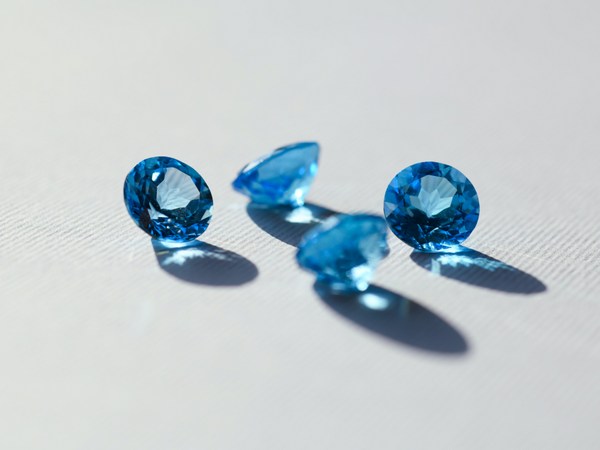
Birthstones are gemstones that are traditionally associated with a particular month in the Gregorian calendar.Each month, people’s birthstone is the gemstone that corresponds to the date of their birth. For example, if someone was born on January 1st, their birthstone would be garnet.  This is because garnets are the birthstones for January births.  But why should that be?  Where did the idea come from?  How seriously should we take the birthstone idea?  Does it need to be stuck to rigidly or is there some room for flexibility?  Do you like your birthstone or would you rather pick out a stone that you like?

There are a lot of legends and lore surrounding the practice of wearing birthstones. Many people believe that the idea of wearing birthstones started out as a marketing ploy by companies selling jewelry, but the reason behind the practice is much, much deeper than that. The practice of wearing birthstones has deep roots in religion and astrology.

The Myths Behind the Practice

One of the earliest stories connected to the practice of wearing birthstones comes from the Christian Bible. In the book of Exodus, the Breastplate of Aaron is described to have been mounted with twelve precious stones: ruby, topaz, beryl, turquoise, sapphire, emerald, jacinth, agate, amethyst, chrysolite, onyx and jasper. These twelve stones represented each of the twelve tribes of the Hebrews.

Other ancient cultures, the Hellenics and the Babylonians in particular, have associated certain precious stones with their gods and goddesses, and later on with the planets and the stars represented in astrological signs. These stones were given attributes pertaining to the astrological signs they are linked with, as well as supernatural, protective powers. To wear the particular gemstone associated with a particular month on that given month is to invoke the protection offered by the power of the stone.

Over time and as Christianity came to rise, the Church tried to downplay astrology in the lives of the flock, and so wearing gemstones came to represent guardian angels and the twelve apostles of Jesus Christ instead. The idea that gemstones have the power to protect its wearer was nonetheless retained. However, since only wealthy people can afford owning a different gemstone for each month, most people have adopted the practice of wearing just the gemstone that represents the month of their birth. Since then, these gemstones were referred to as birthstones.

The Meaning behind the Stones

Here are the different birthstones for each month of the Gregorian calendar and the meaning behind these stones.

1. January. The garnet is the birthstone for the month of January. The bright red color of the garnet is associated with blood and thus, was thought to bestow good health upon its wearer. The garnet is also said to provide protection against nightmares and against the dangers posed by being alone in the dark. A person who favors the garnet is said to possess great patience and the capacity to endure hardships. This person whose birthstone is the garnet is consistent with his or her deeds and is blessed with a creative mind.

2. February. A person born on the month of February has the amethyst for his or her birthstone. Amethyst is said to bestow, among other things, peace and clarity of the mind to its wearer. This gem also brings him or her a heightened sense of self-awareness and intuition.

3. March. For the person born in March, aquamarine is his or her birthstone. This stone is said to nurture friendliness in its wearer’s personality, making him or her a fierce and loyal comrade and companion. Because of its sea-blue color, the aquamarine is said to grant its wearer protection when he or she goes swimming traveling by water.

4. April. The diamond, the stone of strength, longevity and innocence, is the birthstone of people born in April. Because the diamond is the hardest gemstone, it symbolizes success and excellence, and is believed to bring forth good fortune. The diamond is also said to bring forth the purity of its wearer and encourages him or her to be truthful always.

5. May. The birthstone of people born in May is the gemstone of peace and healing – the emerald. It is believed that wearers of emeralds are granted good health and protection against illness. Wearers of emeralds are also said to have a higher level of foresight and possess the ability to communicate well with others.

6. June. Pearls, produced by oysters and therefore the only gemstones that came from a living creature, is the birthstone of people born in June. June is the month of weddings in the Western world, and so the pearl has come to be associated with successful marriages, as well as with faith, loyalty and tranquility in life.

7. July. The sanguine ruby is the birthstone for July. Because of its blood-red color, the ruby is considered to be the gemstone for courage, strength and vitality. It is also said to nurture in its wearer integrity and contentment in his- or herself. The ruby is also said to inspire people to seek harmony with others.

8. August. People born in August have the peridot as their birthstone. The peridot is said to bestow a heightened sense of dignity upon its wearer, and to bring upon him or her good fortune. It is also believed to provide its wearer protection against evil intentions and against the terrors of the night.

9. September. Sapphire is the birthstone of September. It is a gemstone that is thought to build wisdom and clarity of thought in its wearer, as well as allow him or her the discernment to see truth no matter how deeply it is buried. The sapphire also inspires its wearer to develop serenity and tranquility in his or her soul.

10. October. The birthstone for October is the opal. The opal, with its varying colors, is associated with depth in emotions. A person who wears the opal is granted the ability to feel deeply for his or her fellow person, to look at life with hope and to burn subtly with an inner fire.

11. November. Topaz, the birthstone for the month of November, is a gemstone that represents health in body as well as health in mind. Wearing the topaz is said to hasten a person’s ability to heal his or her own body in times of illness or injury. It is also thought to nurture practicality and creativity in its wearer.

12. December. Wearing the turquoise, the birthstone of December, is believed to bring luck and prosperity to its wearer in time for the coming New Year. The turquoise is also said to banish negative vibrations that can hinder the wearer’s happiness and good fortune.

The practice of wearing birthstones goes deeper beyond any marketing ploy. It is a practice that has ancient origins, with deep roots in religion and astrology. Birthstones are versatile gifts to give on any season or occasion. Giving birthstones to loved ones shows caring and deep regard.

Filed Under: Accessories, Jewellery

A Short History of the Wristwatch

16 December 2022 by amber Leave a Comment

wristwatch history
Photo by Amin Hasani on Unsplash

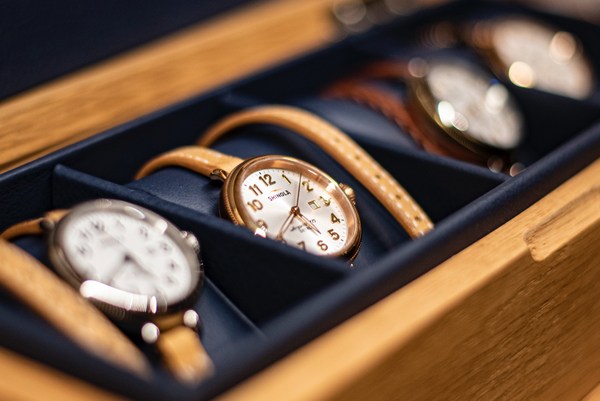
Wristwatches have come a long way from being just a timekeeping device. They have become fashion accessories that are worn with the intention of making a statement about the person’s style.  Often people will pick out a watch for an outfit or change the strap to suit the colours they are wearing that day.  In the past people probably only owned one watch and didn’t have the opportunity to change the strap colour regularly, but now it’s much more easy to make a fashion statement of your wrist wear.  There are so many more options available and it’s more affordable to have a choice of watches.

Over the centuries clocks have been used as a status symbol by those who wear them. Their precision, elegance and convenience are just some of the attributes that clocks and watches represent. Often they are bought purely for their aesthetic looks. and at other times they are bought because of their technical attributes like being precise to the last second or even millisecond. This is what makes clocks and watches so collectible and in some cases they can command high sums of money.

Whether you collect the new high precision watches or ones that come from a past era, the fact is that over the years this hobby has become a high turnover business. And collecting watches is in a lot of circles regarded as a wise form of investing.

At the start of the last century the clocks that were available for men or women were firstly pocket clocks, and then clocks that held by a pendant attached to the lining of jackets or corsets. The advent of war, industrialization, and the development of the sport activities, brought over new trends which extended to not only the way we dressed, but also how we carried our clocks.

It is said that it was a nanny who invented wrist watches at around the end of the 19th century, who fixed a clock around her wrist by using a silk band. The first watches to be made were in fact smaller models of pocket clocks that were fitted with a leather strap. Once this product hit the market newer designs started to be produced based around this same concept.

It was Louis Cartier who first made the kind of watches we see today when he created a watch for a flying pioneer hero by the name Santos Dumont. By 1911 this same type of watch was on general sale. That same type of watch became the blueprint of what wrist watches look like to this day.

Soon after the design of wrist “clocks” began to diversify away from the classical round shape that had been in vogue up until that time. From the Cartier classical wrist watch other makes of watch started to emerge which were characterized by their shape. Movado is the perfect example of these new designs when it came out with the “Polyplan” shaped watch. Then came the famously and cryptically called “clock reference n. 1593” by Patek Philippe which was a rectangular shaped watch.

From 1913 onwards more and more watches started to be developed in all shapes and styles. From the “gondola” watch of Patek Phillipe to Louis Cartiers’ “Tank”; named thus because it was inspired by the shape of English armored cars of the time. These are watches which are very much sought after. There were other numerous watch makers like Audemars Piguet, Vacheron Constantin who along with Patek Philippe and Cartier came out with many other designs which added other features to the watches like lunar phases, month and day most of which are found in modern watches now.

Of course we could not mention wrist watches without mentioning the most famous of them all: the Rolex watch. In the 1920s Rolex debuted in the world of wrist watches with the elegant Rolex Prince and its revolutionary “dual time” feature made famous for having the “seconds sector” larger than that of the minutes. At the same time Jaeger Le Coultre produced an even more advanced piece called the “Reverse”, also very revolutionary in that it could be turn 180 degrees within its case, thus protecting the crystal and dial. It became incredibly popular and was only prevented from achieving even greater success by the recession of the 1930s and the advent of world war 2.

These early watches of the 1910s to 1930s are what define all the makes of watches that we see and wear today. This short article has only scratched the surface of what is a very vast subject which has many more watch makers with diverse and revolutionary designs. However it is makers like Rolex, Cartier, Jaeger Le Coultre and the others mentioned that are amongst the most valuable and collectible, and should you ever be so lucky to get one then make sure you hang on to it – preferably to your wrist.

For more histories of clothing items, see our short histories of socks, neckties and gloves.

Filed Under: Accessories, Jewellery

  • « Previous Page
  • 1
  • …
  • 5
  • 6
  • 7
  • 8
  • 9
  • …
  • 12
  • Next Page »

About Me

I'm the It GirlHi I’m Amber.  I love all things fashion and beauty.  Check out I’m The It Girl for all the latest trends of how to look and what to wear.  I’ll also hightlight the best places to go to see and be seen.  For more about the It Girl click here.

Recent Posts

  • Everyday Hair Habits That Could Be Damaging Your Hair Without You Noticing
  • LEVI’S 501 HAS BEEN VOTED THE MOST ICONIC FASHION ITEM OF ALL TIME
  • The Importance of Using Eye Protection When Using Home Laser Equipment
  • The Capsule Wardrobe Revolution: Simplifying Style, Simplifying Life
  • Why Don’t You Look Good in the Clothes you Love?

Copyright © 2026 · Lifestyle Pro Theme on Genesis Framework · WordPress · Log in